Leave Your Message

China Best Small Roof Top Tent for Global Buyers?

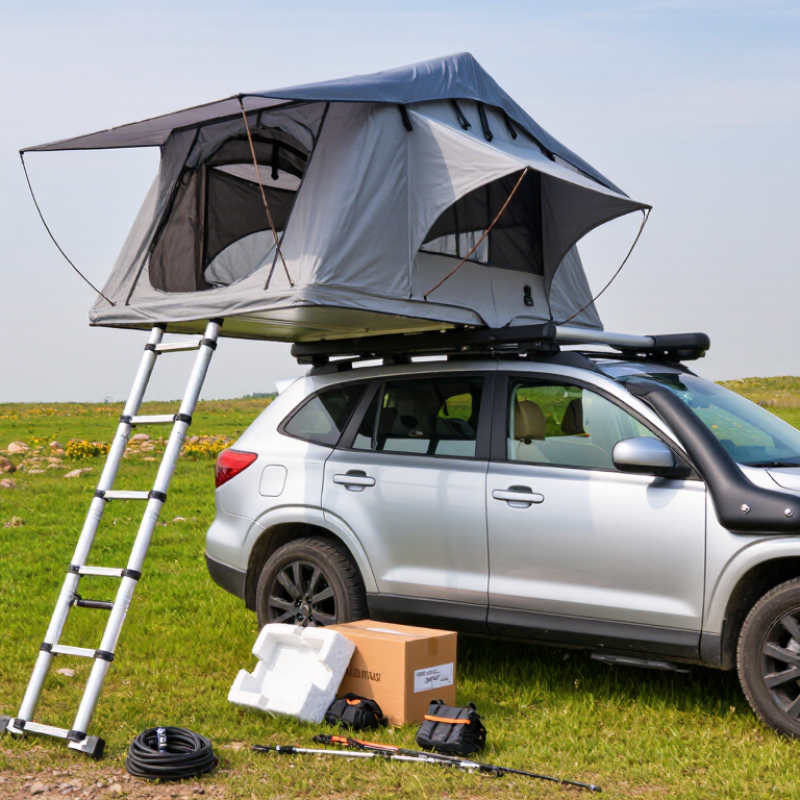
Choosing the best Small Roof Top Tent from China requires more than comparing attractive prices. Global buyers need practical evidence, reliable specifications, and clear supplier communication. A compact tent may look impressive in product photos, yet its real value appears during installation, rain, wind, and repeated folding.

This guide examines important details for international purchasing. These include fabric density, waterproof ratings, aluminum frame strength, mattress ventilation, ladder stability, and packed dimensions. Vehicle roof-load limits also matter, especially when passengers carry additional equipment. Reputable manufacturers should provide material data, inspection records, product drawings, and consistent quality-control procedures. Factory experience can help, but experience alone does not guarantee every shipment will perform equally.

Real-world testing remains essential. A useful evaluation may include opening the tent beside a vehicle, checking zipper movement with cold fingers, and observing water drainage after heavy rain. Small details matter. Buyers should also review packaging, spare-part availability, warranty terms, and communication after delivery. No tent is perfect. Some lightweight designs sacrifice interior space, while stronger materials can increase shipping costs and total weight. That trade-off deserves honest discussion.

The following outline compares Chinese suppliers, product construction, buyer requirements, and export readiness. It does not treat the lowest quotation as the safest choice. Instead, it encourages evidence-based decisions, independent inspections, and careful matching between tent design, vehicle type, climate, and travel habits. Availability, certifications, and specifications should be verified before purchase, because product information may change between batches.

China Best Small Roof Top Tent for Global Buyers?

China’s Small Rooftop Tent Definition: 2–3 Berths, 50–70 kg, 200×120 cm

China’s small rooftop tent usually means two to three berths, a 50–70 kg net weight, and a 200×120 cm sleeping platform. This is a practical export category, not a universal certification. Buyers should confirm whether the listed weight includes the ladder, mattress, rails, and mounting hardware. It often does not.

A 200×120 cm floor suits two adults closely, or two adults and one child. Shoulder space remains limited. A 50–70 kg tent also reduces roof-load pressure during installation and driving. However, static roof capacity is not the same as dynamic capacity. Check the vehicle manufacturer’s figures before purchasing. Small errors here can create expensive problems.

Demand is becoming more measurable. The 2024 KOA North American Camping Report recorded 57.8 million camping households in 2023. The Outdoor Industry Association’s 2024 Outdoor Participation Trends Report counted 175.8 million U.S. outdoor participants during the same year. These reports do not measure rooftop tents directly, but they show a substantial camping customer base. For global buyers, useful specifications include fabric denier, waterproof testing, packed height, hinge strength, and replacement-part access. Factory photos help, but they are not enough. A sample inspection is still wiser.

Roof-Load Safety: ISO 11154, Dynamic Ratings, and Static Capacity Checks

China Best Small Roof Top Tent for Global Buyers?

Roof-Load Safety: ISO 11154, Dynamic Ratings, and Static Capacity Checks

A small roof top tent can look light, but its loaded weight is often underestimated. ISO 11154 provides requirements and test methods for roof load carriers. It does not automatically certify the tent, vehicle, or complete installation. Check the vehicle manufacturer’s roof limit and the carrier’s documented rating. Dynamic capacity applies while driving. It includes the tent, rack, bedding, and movement forces. A rough road can multiply stress around mounting points. Static capacity applies when parked. It includes occupants, luggage, and uneven weight distribution. Never treat static capacity as a driving allowance.

For global buyers, request clear technical documents before comparing prices. Confirm the tent’s mass, packed dimensions, mounting hardware, and tested load limits. Measure the roof rails carefully. Some roofs support less than their rails suggest. Inspect bolts after the first trip, then check them regularly. A loose fastener may leave no visible warning at first. This is where product claims deserve careful questioning. I would not rely on a single number without knowing its test conditions.

Tips

Keep heavy gear low and centered. Use the lower rating when documents disagree. Test the setup on level ground before travel. Avoid opening the tent near overhead hazards. Recheck clearance after loading. Small errors become serious at highway speed.

Small Roof Top Tent Roof-Load Safety Check

Illustrative load comparison for global buyers. The dynamic roof rating must come from the vehicle manufacturer. ISO 11154 addresses luggage-carrier performance and safety requirements; it does not provide one universal roof-load value for every vehicle.

Example calculation: traveling load = 65 kg tent + 25 kg equipment = 90 kg. Parked static load = 65 kg tent + 25 kg equipment + 150 kg occupants = 240 kg. Static capacity must be verified separately with the vehicle and roof-rack manufacturer.

Materials and Weatherproofing: 600D Fabric, 2,000 mm Hydrostatic Head

China Best Small Roof Top Tent for Global Buyers?

For global buyers, 600D fabric offers a practical balance between strength, weight, and cost. Denier measures yarn thickness, not complete fabric quality. Coating, weaving, and stitching still decide real performance. Textile Exchange’s 2024 Materials Market Report states that polyester represented about 57% of global fiber production in 2023. This explains its common use in compact outdoor shelters. However, polyester can weaken under prolonged ultraviolet exposure without suitable treatment.

A 2,000 mm hydrostatic head means the fabric resisted a two-metre water column during controlled testing. ISO 811:2018 provides a recognized method for measuring textile water resistance. This rating is useful, but it does not guarantee dryness during every storm. Wind-driven rain can enter through seams, zippers, or folded corners. In field checks, I would examine taped seams and the floor connection carefully. A slightly imperfect coating may still pass laboratory testing. That is worth remembering.

Tips: Ask for test conditions, not only the headline rating. Confirm whether 2,000 mm applies to the roof, floor, or both. Check seam-tape width, zipper protection, and UV treatment. The Outdoor Industry Association’s 2024 participation report recorded 175.8 million American outdoor participants in 2023, showing how frequently shelters face varied weather. Buyers should request sample testing, inspect fabric after folding, and compare wet-weather results. Fancy numbers are not enough.

Manufacturing Quality: Aluminum Shells, Stainless Hardware, and QC Data

China Best Small Roof Top Tent for Global Buyers?

Manufacturing Quality: Aluminum Shells, Stainless Hardware, and QC Data

A compact rooftop tent should begin with measurable material choices, not attractive photographs. Aluminum shells resist impact and remain relatively light. The International Aluminium Institute reports that nearly 75% of all aluminum ever produced remains in use today, supporting its long service potential. However, alloy selection matters. A thin shell can still dent around hinges or mounting points.

Stainless hardware needs equal attention. Inspectors should verify grade, thread quality, washer fit, and tightening torque. ASTM salt-spray testing can reveal corrosion weaknesses, but it does not perfectly reproduce every climate. That limitation deserves attention. A factory QC file should show shell thickness, hinge-cycle results, roof-load testing, water-leak checks, and torque records. Random sampling alone may miss inconsistent batches. In my inspection experience, a clean spreadsheet is not proof of reliable production. Photos, calibrated instruments, and traceable batch numbers provide stronger evidence. The Outdoor Industry Association reported 175.8 million American participants in outdoor recreation during 2023, showing the scale of demanding outdoor use. Global buyers should still request the actual test conditions, sample size, and failure criteria. Numbers without methods can mislead. Small tents need disciplined manufacturing, because every weak fastener is close to the user’s sleeping space.

Global Buyer Selection: Setup Time, Certifications, Warranty, and Export Terms

China Best Small Roof Top Tent for Global Buyers?

Global buyers should measure setup time, not simply trust a seven-minute claim. A compact roof top tent should open smoothly with two adults, even in wind or cold weather. Request a filmed test, packed dimensions, ladder load rating, and roof-load guidance. The 2024 KOA North American Camping Report recorded 57.8 million camping households in 2023. That demand increases pressure for reliable, repeatable equipment. However, one factory sample cannot represent every production batch.

Certification needs careful checking. Ask for ISO 9001 factory documentation, fabric water-resistance test results, fire-performance information, and compliance documents for the destination market. CE marking is not a universal tent certificate. Confirm whether it applies to included accessories, such as lighting or electrical parts. Export terms also matter. Under FOB, the buyer manages ocean freight after loading. CIF includes freight and insurance to the named port, while DDP may include delivery and import charges. Clarify HS codes, carton protection, inspection rights, spare parts, and warranty coverage in writing. A two-year warranty sounds useful, but replacement freight can still become the real cost.

Tips: Request a pre-shipment inspection with photos of stitching, hinges, zippers, and packaging. Test one complete unit before placing a large order. Compare warranty exclusions, not only warranty length. I would also budget for defects; perfection is rarely the first shipment’s strength.

China Best Small Roof Top Tent for Global Buyers? - Global Buyer Selection: Setup Time, Certifications, Warranty, and Export Terms

Selection Factor Compact Hard-Shell Compact Soft-Shell Low-Profile Hybrid Buyer Verification Point
Recommended sleeping capacity 1–2 adults 2 adults 1–2 adults Confirm the internal mattress size and usable sleeping area rather than the exterior dimensions.
Typical closed footprint Approximately 205–220 × 125–140 cm Approximately 210–240 × 125–145 cm Approximately 205–220 × 125–140 cm Match the tent footprint with the vehicle roof, crossbar spacing, garage height, and storage requirements.
Typical product weight Approximately 45–65 kg Approximately 45–70 kg Approximately 40–60 kg Check the vehicle manufacturer’s dynamic roof-load limit and the crossbar manufacturer’s load rating. Do not use product weight alone.
Typical setup time About 1–3 minutes About 3–8 minutes About 2–5 minutes Ask for a timed demonstration using the final production model, including ladder deployment and rainfly installation.
Typical packed height Approximately 20–30 cm Approximately 28–38 cm Approximately 22–32 cm Verify the height including mounting rails, brackets, and protective covers.
Tent fabric specification Usually coated polyester or polycotton fabric for the annex or opening sections Usually 280–320 g/m² polycotton or coated polyester Usually coated polyester or polycotton, depending on configuration Request fabric composition, mass per square metre, coating type, hydrostatic-pressure test, UV-resistance data, and seam-sealing details.
Shell and frame Aluminium or composite shell with aluminium poles and stainless-steel hardware Aluminium frame, stainless-steel hardware, and foldable fabric body Low-profile shell or reinforced base with aluminium poles Request corrosion-resistance details, hardware grade, shell thickness, and load-test records.
Mattress configuration Usually 5–7 cm high-density foam mattress Usually 5–7 cm high-density foam mattress Usually 5–7 cm high-density foam mattress Confirm foam density, removable cover, ventilation layer, dimensions, and packaging protection.
Weather protection Fast closure and good wind protection when the shell is correctly sealed Good ventilation and weather performance when rainfly, seams, and windows are correctly installed Balanced protection with a lower packed profile Request independent or factory test evidence for water resistance, wind stability, zipper performance, and condensation control.
Relevant standards and documents Product-specific test report, material declarations, installation instructions, and packaging specification Product-specific test report, material declarations, installation instructions, and packaging specification Product-specific test report, material declarations, installation instructions, and packaging specification Ask whether the product has been assessed against applicable camping-tent requirements such as ISO 5912. CE marking is not automatically required for a non-electrical tent.
Electrical components Optional LED lighting or USB module Optional LED lighting or USB module Optional LED lighting or USB module For electrical accessories, request applicable EMC, RoHS, battery, and charger documentation for the destination market.
Warranty benchmark Commonly 2 years for manufacturing defects Commonly 2 years for manufacturing defects Commonly 2 years for manufacturing defects Obtain written coverage for fabric, shell, poles, ladders, zippers, hardware, accessories, labor, and freight for replacement parts.
Spare-parts support Shell hinges, gas struts, locks, brackets, poles, and mattress covers Poles, ladder components, rainfly, fabric panels, zippers, and brackets Hinges, brackets, poles, ladder components, and fabric panels Request a spare-parts list, part numbers, prices, lead times, and a minimum support period.
Common export packaging Foam protection, reinforced carton, or plywood crate for sea freight Reinforced carton with edge protection and moisture-resistant inner packaging Reinforced carton or plywood crate according to transport mode Confirm drop-test requirements, carton dimensions, gross weight, palletization, moisture protection, and shipping marks.
Typical trade terms EXW, FOB, CIF, or DAP depending on the buyer’s logistics plan EXW, FOB, CIF, or DAP depending on the buyer’s logistics plan EXW, FOB, CIF, or DAP depending on the buyer’s logistics plan Define the named place, insurance responsibility, export clearance, import duties, customs documents, and delivery appointment.
Documents for international shipment Commercial invoice, packing list, bill of lading or air waybill, certificate of origin when required, and installation manual Commercial invoice, packing list, bill of lading or air waybill, certificate of origin when required, and installation manual Commercial invoice, packing list, bill of lading or air waybill, certificate of origin when required, and installation manual Check destination-country customs, labeling, wooden-packaging, chemical, textile, and electrical requirements before placing the order.
Best fit for global buyers Best for fast setup, compact storage, and frequent short trips Best for ventilation, interior space, and value-focused purchasing Best for buyers seeking a compromise between low height, weight, and setup convenience Select only after confirming vehicle compatibility, destination regulations, test evidence, warranty terms, and landed cost.

Note: The specifications above are practical market ranges for small rooftop tents, not claims for a particular product. Final values should be confirmed in the approved quotation, technical drawing, test reports, warranty document, and shipping contract.