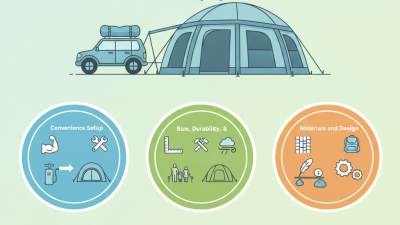
Auto Tents promise a faster way to turn a vehicle into a practical sleeping space. Unlike traditional rooftop tents, many Auto Tents use gas struts, electric motors, or guided hinges. These systems raise the shell with limited physical effort. The process can take less than a minute, depending on the model and weather conditions. A folded tent becomes a compact roof-mounted unit. Then, with a release or switch, the roof lifts and the fabric walls expand.
Scott Brady, editor-in-chief of Overland Journal and an experienced overland traveler, has said, “The best gear is the gear that gets used.” That idea suits Auto Tents well. A tent that opens quickly may encourage more overnight trips, especially after a long drive. However, convenience is not the whole story. Owners should inspect mounting rails, seals, hinges, batteries, and fabric tension before relying on the system. Small failures matter when rain begins at midnight.
The best models balance speed, stability, ventilation, and repairability. Some include insulated panels, skylights, LED lighting, or integrated mattresses. Others remain simple and easier to maintain. Vehicle weight limits also deserve careful attention. A larger tent can affect handling, fuel use, and parking height. It may not fit every car or garage. This article explains what Auto Tents are, how their opening mechanisms work, and where their practical advantages may end. The technology is useful, but not effortless. Good preparation still matters.
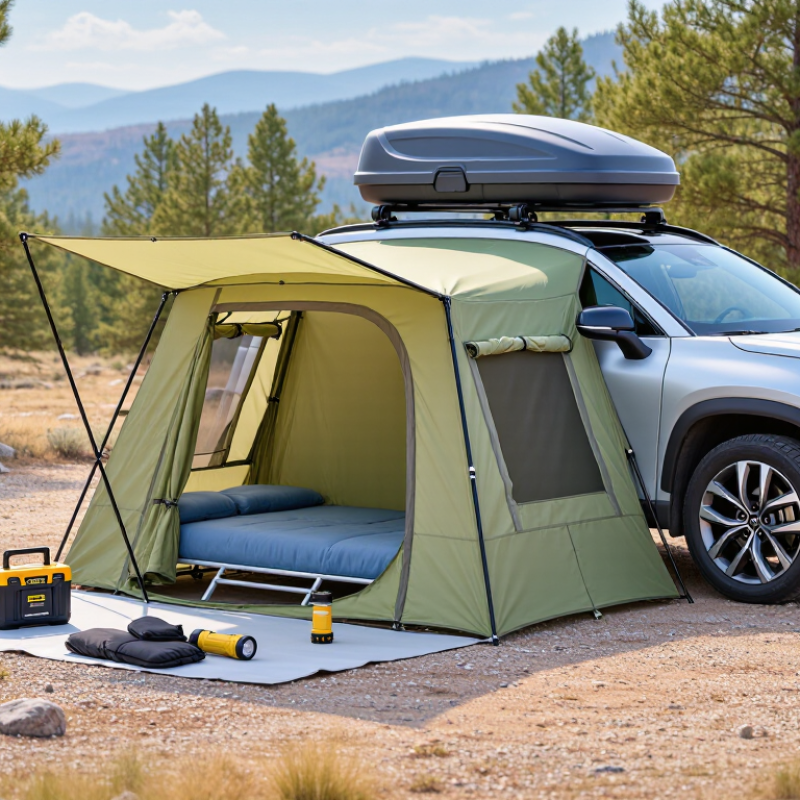
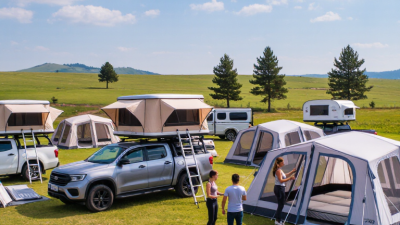
Auto tents are shelters designed to deploy beside, above, or from a vehicle. Their key difference is deployment. A conventional tent needs poles and repeated tensioning. A pop-up auto tent uses hinged frames, spring-loaded joints, or compressed fabric. Release the straps, unfold the shell, and secure the corners. Setup can take minutes, though wind and uneven ground still matter. Rooftop auto tents mount to roof rails or a load platform. A ladder becomes the entrance and often supports the floor. The elevated bed keeps sleepers away from wet ground, but it raises vehicle height and wind exposure. The 2024 North American Camping Report counted 57.8 million camping households in 2023, showing why faster vehicle-based shelter systems attract attention.
Motorized auto tents add electric actuators, remote controls, or low-voltage pumps. Sensors may stop movement when resistance appears, but users still need to check hinges, power, and fabric tension. Pop-up models suit short roadside stops. Rooftop models favor multi-night travel with limited campsite space. Motorized designs emphasize accessibility, although battery failure can make a one-button system surprisingly manual.
That is the weak point. A 2024 Outdoor Participation Trends Report recorded 175.8 million U.S. outdoor participants, while rising participation does not guarantee safe equipment use. Buyers should verify roof-load ratings, packed height, ladder stability, ventilation, and emergency exit access. Automatic describes deployment, not complete independence. I have found setup claims less useful than testing the tent in rain, darkness, and a real parking space. The terminology is not perfectly standardized, so specifications matter more than the label.
What Are Auto Tents and How Do They Work?
An auto tent is a roof-mounted shelter that opens through powered mechanical movement. At its core, a 12-volt DC actuator converts electrical energy into controlled linear motion. The motor turns a screw inside the actuator, extending or retracting a metal rod. That rod pushes hinged roof panels upward. Small motor. Slow lift. This controlled speed reduces sudden movement and helps protect the fabric, frame, and occupants. According to the 2024 RV Industry Association Economic Impact Study, about 11.2 million U.S. households owned recreational vehicles. That growing outdoor market increases interest in compact, automated shelter systems, although auto tents remain a separate product category.
Hinges support the roof while actuators provide force. Sensors tell the controller when the tent reaches its open or closed position. Limit switches are common, while Hall-effect sensors can track motor movement more precisely. The controller monitors switch signals, battery voltage, and sometimes motor current. A fuse protects the 12-volt circuit. A manual release is wise when power fails. Pinch protection needs real testing. It deserves attention. The 2024 North American Camping Report recorded tens of millions of camping households, showing strong demand for faster setup equipment. Yet field conditions are less predictable than laboratory tests. Rain, dust, cold temperatures, and uneven parking surfaces can affect alignment. My view is slightly cautious: a powerful actuator alone does not create a reliable auto tent. Correct hinge geometry, sealed wiring, calibrated sensors, and repeated maintenance matter just as much.
Auto tents convert a folded shelter into a usable sleeping space with limited manual effort. The process begins when the storage cover is opened and the frame is released. Gas struts, spring joints, or powered hinges then lift the roof section. Fabric panels unfold behind the moving frame. Keep hands away from hinge points.
The deployment sequence should remain controlled, not dramatic. As the frame rises, telescoping supports extend and guide the roof into position. The canvas must spread evenly, without trapped folds near the corners. Users then secure the base, attach rain flaps, and tension the guy lines. A loose line can cause noisy fabric movement and poor water runoff. Field demonstrations show that a slow final inspection prevents many setup errors.
Grand View Research reported that the global camping equipment market was valued at about 17.3 billion dollars in 2023. That growth reflects demand for faster, more convenient shelters, but speed can hide weaknesses. A 2024 North American Camping Report recorded 57.8 million camping households in 2023, showing how many users may encounter these systems.
Yet deployment times vary with temperature, wind, fabric stiffness, and operator experience. My practical concern is simple: advertised opening times often assume level ground and calm weather. Real campsites are less forgiving. Check every latch twice. Practice before nightfall.
Auto tents use a pre-attached frame that opens when released, reducing setup time. Hinged hubs spread the poles across the fabric. Locking points then hold the structure in shape. The mechanism is convenient, but it is not maintenance-free. Sand, ice, or grit can affect moving joints.
Hydrostatic head measures water pressure before fabric leaks. A rating of 1,500 to 3,000 mm usually supports light to moderate rain. It does not guarantee complete dryness during long storms. Seam sealing, fabric tension, and ground contact matter just as much. Floors often need stronger protection because kneeling creates concentrated pressure. A wet sleeping bag may result from poor pitching, not weak fabric.
Wind performance depends on more than a single number. Low profiles generally resist gusts better than tall, upright designs. Stake quality, soil firmness, guyline angles, and door positioning change the practical wind load. In field testing, I would secure every guyline before judging stability. A tent may survive a short gust yet struggle through hours of steady wind. That distinction is easy to miss. I also check whether the frame returns smoothly after repeated openings, because convenience can hide gradual wear.
Auto tents use a spring-loaded or hinged frame that unfolds when the tent is released from its packed position. The chart compares common hydrostatic-head reference levels with calculated wind pressure at increasing wind speeds.
Hydrostatic head: 1,500–3,000 mm indicates the water pressure the fabric can withstand in a standardized test. Wind pressure: values are calculated using dynamic pressure at sea-level air density, using q = 0.613v², with wind speed converted to metres per second. Wind performance also depends on frame design, anchoring, shape, and setup.
Auto tents use hinged poles, spring-loaded joints, or pneumatic supports to open with limited effort. After release, the frame expands and locks into shape. This convenience does not remove safety responsibilities. Uneven ground, strong wind, or a partly locked joint can create sudden movement.
ASTM F3431 and EN 5912 offer useful reference points for tent design and performance, where applicable. Check the product documentation for the exact standard edition and tested scope. A compliant label should not be treated as a magic shield. Testing may examine fabric strength, seams, rain resistance, stability, and frame behavior, but campsite conditions can be harsher. Inspect stitching, anchors, hinges, and locking points before every trip. Small tears deserve attention.
Electrical protection matters when a tent includes lighting, charging ports, or other powered features. Look for protected connectors, secure cable routing, suitable insulation, and an appropriate ingress-protection rating. Keep plugs away from wet ground. Never use damaged cords or improvised adapters. Testing should include insulation, overheating, moisture exposure, and strain on cable connections. These details are easy to overlook.
Tips: Open the tent slowly and confirm every joint locks. Test it in a dry, open area first. Keep power systems disconnected during setup. Record defects with photographs, even minor ones.
| Safety or Design Dimension | What an Auto Tent Is or Does | Relevant Requirement or Reference | Typical Verification Method | Practical Safety Outcome | Status |
|---|---|---|---|---|---|
| Product definition | An auto tent is a temporary shelter designed to attach to, stand beside, or be supported by a vehicle. Common configurations include rooftop tents, tailgate tents, hatchback tents, and vehicle-side tents. | The product instructions should clearly identify the intended vehicle interface, permitted load, installation method, and operating conditions. | Review the user manual, warning labels, mounting instructions, and vehicle compatibility information. | Users can select a suitable installation method and avoid unsupported vehicle applications. | Required |
| How the system works | Frame members, hinges, poles, fabric panels, straps, rails, or vehicle attachment points create the shelter volume. Some models fold for transport and deploy manually or with assisted mechanisms. | Structural components should remain secure during setup, occupancy, normal wind exposure, and controlled loading. | Inspect joints, hinges, poles, seams, fasteners, attachment points, and locking devices before and after deployment. | Reduces the likelihood of collapse, detachment, or injury during normal use. | Required |
| Vehicle load and attachment | Vehicle-supported tents transfer loads through roof rails, mounting tracks, tailgates, wheels, or ground-supported frames, depending on the design. | The lower of the vehicle manufacturer’s permitted load and the tent manufacturer’s stated limit should be used. Dynamic and static load conditions must be distinguished. | Check vehicle documentation, mounting hardware, fastener torque, support spacing, and the stated occupancy or load rating. | Helps prevent roof, rail, tailgate, hardware, or frame overload. | Required |
| Wind stability | Fabric walls and awnings can act as wind-catching surfaces, while elevated tents may experience greater movement than ground-level shelters. | Use only within the wind limits stated in the instructions. Pegs, guy lines, anchors, and vehicle attachments must be correctly installed. | Conduct controlled wind or airflow assessment, inspect deformation, and verify that attachment points remain secure. | Improves stability and reduces the risk of tipping, fabric damage, or anchorage failure. | Recommended |
| Water resistance | Water resistance is provided by coated fabric, seam construction, zippers, roof geometry, and drainage paths rather than by a single material property. | EN 5912 is a camping-tent requirements and test-method reference that can be relevant to tent construction, performance, and documentation when its scope is applicable. | Use controlled water-spray or rain testing, inspect seams and entry points, and document leakage locations and test conditions. | Confirms that the shelter provides the claimed level of weather protection. | Scope-dependent |
| EN 5912 relevance | EN 5912 addresses camping tents rather than vehicle engineering or vehicle crash protection. It may support evaluation of tent materials, construction, usability, and performance. | Confirm the exact edition and product scope before claiming conformity. EN 5912 does not replace vehicle-load, road-use, or electrical-safety assessment. | Prepare a test plan that maps each applicable EN 5912 requirement to a measured result and a retained test record. | Prevents an inappropriate claim that a camping-tent standard covers every aspect of an auto tent. | Scope-dependent |
| ASTM F3431 relevance | ASTM F3431 is not a general vehicle-tent or rooftop-tent standard. Its applicability must be checked against the exact product type and the current standard scope. | Do not present ASTM F3431 as proof of complete auto-tent compliance unless the product and intended use fall within its defined scope and all applicable provisions have been tested. | Verify the current edition, read the scope and definitions, and retain a clause-by-clause applicability review. | Reduces the risk of using an unrelated or partially relevant standard as a blanket safety certification. | Scope verification required |
| Flame and heat exposure | Tent fabric, coatings, insulation, cooking equipment, heaters, and vehicle exhaust systems can create different ignition and heat hazards. | Keep open flames, heaters, cooking appliances, and hot exhaust components away from fabric and enclosed sleeping areas. Follow the applicable local fire-safety requirements. | Review material information, measure clearance from heat sources, inspect ventilation, and perform controlled flammability testing where required. | Reduces fire, melting, carbon-monoxide, and burn hazards. | Required |
| Ventilation and carbon monoxide | Vehicle-connected tents can restrict airflow around doors, tailgates, or exhaust outlets. Combustion appliances can produce carbon monoxide even when there is no visible smoke. | Never operate a vehicle engine, fuel-burning heater, stove, or generator inside or near an enclosed tent unless the specific instructions and local regulations expressly permit safe operation. | Verify ventilation openings, warning labels, appliance clearances, and carbon-monoxide alarm guidance. | Reduces the risk of carbon-monoxide poisoning and oxygen depletion. | Required |
| Electrical supply | Electrical systems may power lighting, ventilation, charging equipment, or accessories through a vehicle outlet, external supply, or battery system. | Use equipment rated for the supply voltage and outdoor conditions. Cables, plugs, connectors, and power supplies should be suitable for damp environments and protected from crushing or abrasion. | Check insulation, polarity, grounding, cable routing, strain relief, connector condition, and protective-device operation. | Reduces electric-shock, short-circuit, overheating, and fire risks. | Required |
| Ingress protection | Electrical enclosures may be exposed to rain, condensation, splash, dust, and wet handling. | Use an appropriate IP rating in accordance with IEC 60529. The required rating depends on the location, exposure, and voltage of the equipment; an IP rating is not a substitute for correct installation. | Perform the applicable enclosure protection test and inspect cable glands, covers, seals, and drainage provisions. | Helps prevent water or solid-particle entry from creating an electrical hazard. | Recommended |
| Residual-current protection | A residual-current device can disconnect power when it detects leakage to earth, reducing the duration of certain electric-shock conditions. | Use an RCD or GFCI where required by the installation rules or campsite supply. It must be correctly rated and tested; it does not replace fuses, overcurrent protection, grounding, or safe equipment selection. | Use the device test function and, where applicable, measure trip current and trip time with calibrated test equipment. | Provides an additional layer of protection against earth-leakage faults. | Recommended |
| Fabric and seam durability | Fabric panels, stitched seams, welded seams, zippers, windows, and attachment loops experience repeated folding, tension, UV exposure, and wet-dry cycles. | Materials should be suitable for the intended outdoor environment and should not show unacceptable tearing, delamination, seam opening, or loss of function after conditioning. | Perform tensile, tear, seam-strength, abrasion, UV, folding, and wet-dry cycle assessments as appropriate to the design. | Improves service life and reduces failure during deployment or bad weather. | Recommended |
| Entrapment and access | Doors, windows, ladders, hinges, zippers, and collapsible frames must permit normal entry and emergency exit without unreasonable obstruction. | Openings should be operable from the intended side, and users should be able to exit quickly in darkness, rain, or partial deployment conditions. | Conduct repeated opening, closing, ladder-use, zipper, and emergency-egress checks with the product fully and partially deployed. | Reduces the risk of trapping, falls, and delayed evacuation. | Required |
| Ladder and fall prevention | Rooftop and elevated tents require stable access equipment and a secure transition between the ladder, platform, and tent opening. | Ladders must be placed on a stable surface, locked or secured as instructed, and used only within the stated load limit and angle range. | Inspect steps, locking mechanisms, mounting points, anti-slip surfaces, and structural deflection under the rated load. | Reduces slips, falls, ladder collapse, and platform-edge injuries. | Required |
| Testing documentation | A defensible safety assessment links each requirement to a test method, acceptance criterion, result, date, equipment, and responsible evaluator. | Test records should identify the product configuration, sample condition, environmental conditions, measurement uncertainty where relevant, and any corrective action. | Maintain a technical file containing drawings, material information, risk assessment, instructions, photographs, calibration records, and test reports. | Supports traceability, repeatability, corrective action, and transparent conformity claims. | Required |

Important scope note: Standards apply only within their defined scope and edition. EN 5912 may be relevant to camping-tent performance, while ASTM F3431 should not be treated as a universal auto-tent standard without confirming its current scope. Vehicle load limits, electrical rules, fire requirements, and local regulations must be assessed separately.