Leave Your Message

7 Tips for Choosing an Inflatable Tent for Car?

Choosing an Inflatable Tent For Car can transform a crowded campsite into a practical, comfortable base. However, the wrong model may feel bulky, unstable, or frustrating after sunset. A reliable choice begins with real conditions, not attractive photographs.

Outdoor shelter specialist Daniel Mercer says, “A good inflatable tent should simplify camping, not create another problem beside the car.” His advice reflects a common field lesson. A tent that inflates quickly during a sudden shower has genuine value. So does a design with strong valves, reinforced seams, and clear pressure guidance.

This guide examines seven useful considerations before buying. It looks at vehicle compatibility, packed size, inflation time, weather resistance, ventilation, sleeping space, and repair support. Measure your boot carefully. Check the tent’s connection height. Imagine carrying it across wet grass with cold hands.

Small details matter.

For example, a wide entrance may help when moving bedding inside. Mesh panels can reduce condensation on humid mornings. A built-in awning might provide shade, but it can also increase packed weight. Manufacturer ratings deserve attention, although they should not replace careful inspection.

My own expectation was simple: faster setup would always mean better camping. That assumption needs reconsideration. Some fast-pitch shelters sacrifice storage space or interior height. The best Inflatable Tent For Car balances convenience, durability, comfort, and realistic transport needs. This article will help you compare those points with greater confidence.
7 Tips for Choosing an Inflatable Tent for Car?

Define Your Camping Needs and Vehicle Compatibility

7 Tips for Choosing an Inflatable Tent for Car

Your camping needs should guide every tent decision. Decide whether you need sleeping space, a sheltered cooking area, or extra room for wet gear. A couple travelling lightly may prefer a compact vestibule. Families usually need stronger airflow and separate sleeping zones. Consider your usual trips too. Weekend camps require different features from long stays in changing weather.

Measure your vehicle before buying an inflatable tent. Check its overall length, roof height, door position, and available attachment points. The tunnel should connect without blocking doors, lights, or exhaust areas. Measure twice. A small error can create serious tension during setup. Also check the vehicle’s recommended load limits and the tent’s packed weight. Your roof system must safely support the attachment method.

Try to picture the campsite, not just the product photograph. Uneven ground may demand adjustable straps and a forgiving floor design. Windy locations require secure pegs and correctly inflated air beams. I once chose a spacious shelter that fitted the car but left too little room for opening the rear hatch. That mistake made rainy mornings unpleasant. A short practice setup at home can reveal awkward steps, missing measurements, or weak connections before your trip. Inflate the beams fully, inspect the seams, and test ventilation with doors closed. Small details matter.
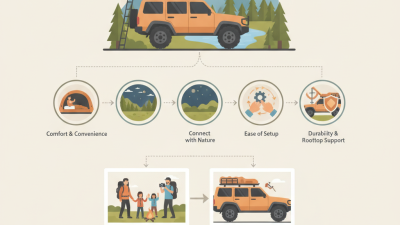
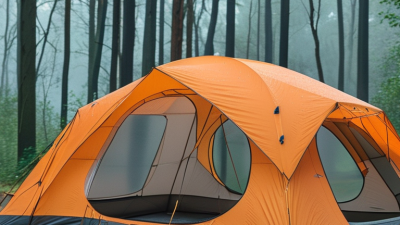
7 Tips for Choosing an Inflatable Tent for Your Car

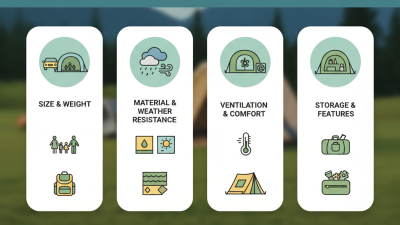
Use these practical planning benchmarks to compare tent size with your camping needs and vehicle compatibility. Always verify the tent manufacturer’s measurements against your vehicle before purchase.

How to use the chart: Start with the number of campers and required sleeping area, then confirm that the tent’s vehicle connection height, access width, and packed size suit your car. Leave additional space for equipment, movement, and ventilation.

Compare Inflatable Tent Types, Sizes, and Sleeping Capacity

7 Tips for Choosing an Inflatable Tent for Car

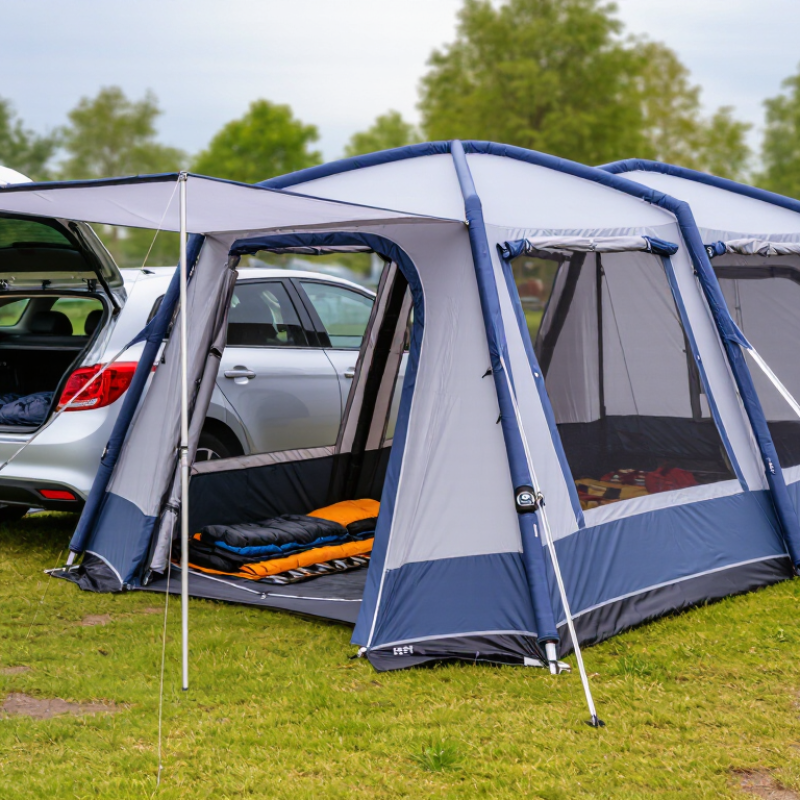
Compare the tent type with your travel routine. An awning tent attaches to the car and adds sheltered living space. A rear-access tent connects neatly to the hatchback. A standalone inflatable tent offers more privacy and remains useful after driving away. Check the attachment height carefully. I once bought a model with an awkward fit. It worked, but setup became frustrating in rain.

Measure both the packed size and the sleeping area. A two-person tent may feel comfortable for two adults and gear. A four-person tent gives children more room, but it needs a larger campsite. Sleeping capacity is not the same as comfort. Look for separate bedrooms, ventilation panels, and enough headroom to change clothes. For three people, I prefer a four-person layout when carrying wet jackets. Extra floor space matters.

Examine the air-beam design, fabric, floor, and pump. Reinforced seams and a waterproof groundsheet improve reliability on rough campsites. Choose a manual or electric pump that matches your vehicle’s power options. Test the inflation points before your trip. Do not ignore packed weight. A lightweight tent is easier to lift, although thinner materials may need gentler handling. I still misjudge storage space sometimes. Leave room for poles, bedding, cooking equipment, and muddy shoes. Read independent reviews and verify repair support before paying.

Evaluate Materials, Weather Resistance, and Frame Stability

Choosing an inflatable tent for a car starts with the fabric, not the shape. Check the denier rating, coating type, and seam construction. ASTM D751 provides recognized methods for testing coated fabrics, including tensile strength, tear resistance, and hydrostatic pressure. Ask for test results, not vague claims. A higher denier fabric may resist abrasion better, but it can also increase packed weight. That trade-off is easy to overlook.

Weather resistance needs practical evidence. Fully taped seams, covered zippers, and a bathtub-style floor reduce water entry. NOAA recorded 27 billion-dollar weather and climate disasters in the United States during 2024. Severe weather is not a rare design concern. Look for a stated hydrostatic-head value, UV treatment, and ventilation that limits condensation. “Waterproof” alone tells you very little. I would treat missing test data as a warning, even when the material feels thick.

Frame stability depends on air-tube diameter, internal bracing, anchor points, and pressure retention. Compare the design with ISO 5912:2022, which sets requirements and test methods for camping tents. Use a pressure gauge if the instructions provide a target range. Check valves for slow leaks before leaving home. A tent can feel rigid beside the car, then move noticeably under crosswinds. I would test it in moderate conditions first, because real setup mistakes often expose weaknesses that brochures do not mention. Never rely on the tent as a storm shelter.

Check Setup Methods, Inflation Systems, and Packability

Choosing an inflatable tent for car travel starts with setup, not appearance. The 2024 North American Camping Report recorded 57.8 million camping households in 2023, showing strong demand for quicker outdoor shelters.

Tip 1: Practice beside your vehicle before leaving.

Tip 2: Compare sleeve inflation with external air-beam valves. External valves are easier to inspect and replace.

Tip 3: Check whether one pump fills every chamber. Separate chambers add security, but they also increase setup time.

Tip 4: Measure the tent footprint against your parking space. A wide rear section may block doors or tailgates.

Tip 5: Test inflation on uneven ground. A tent can look firm while its base twists.

Tip 6: Choose a pump with a pressure gauge and an automatic shut-off. Guessing pressure is possible, but it is not a reliable habit.

The Outdoor Industry Association’s 2024 Outdoor Participation Trends Report counted 175.8 million U.S. outdoor participants in 2023. More casual campers may value simple systems over technical features. That seems reasonable, though personal use matters more than market averages.

Tip 7: Weigh the packed shelter, pump, repair kit, and pegs together. Do not judge packability from the storage bag alone. Look for a compression sack, broad carry handles, and a folded length that fits your trunk.

Try packing it when fabric is slightly damp; this exposes weak bag designs. I once focused too much on packed volume and ignored awkward valve placement. That mistake made loading slower than expected. Let real handling, not specifications alone, guide the final choice.

Review Safety Features, Accessories, and Overall Value

Choosing an inflatable tent for your car requires more than checking sleeping capacity. During setup, inspect every air beam, valve, seam, and anchor point. A soft valve cap can become a serious problem in strong wind. I prefer tents with separate air chambers, because one puncture should not collapse the entire shelter. It happened to me once. I underestimated the ground.

Safety deserves careful attention. Look for flame-retardant fabric, clear ventilation panels, reflective guy lines, and sturdy storm straps. Never cook inside the tent, even during rain. Carbon monoxide has no smell, and poor airflow can turn a comfortable shelter into a dangerous space. The National Fire Protection Association repeatedly identifies portable heating and cooking equipment as major fire hazards. Check the tent’s tested load, wind guidance, and relevant camping-tent standards before buying.

Accessories also affect overall value. A repair kit, manual pump, footprint, blackout inner, and storage bag can prevent expensive replacements. The 2024 Outdoor Industry Association Participation Trends Report recorded 175.8 million U.S. outdoor participants in 2023, showing strong demand for practical camping equipment.

However, popularity does not guarantee quality. Compare packed size, inflation time, warranty terms, replacement valves, and repair support. A cheaper tent may cost more after one failed weekend. I still prefer simple designs, although I sometimes overpack accessories. That is worth reconsidering. Measure your vehicle first, then test access to doors, tailgates, and emergency exits.