Why Is Choosing the Right Camping Equipment Important?
Choosing the right camping equipment is essential for any outdoor adventure. According to Jane Smith, an experienced outdoor gear specialist, "The right equipment makes or breaks your camping experience." Selecting quality camping gear can determine your comfort and safety in the wild.
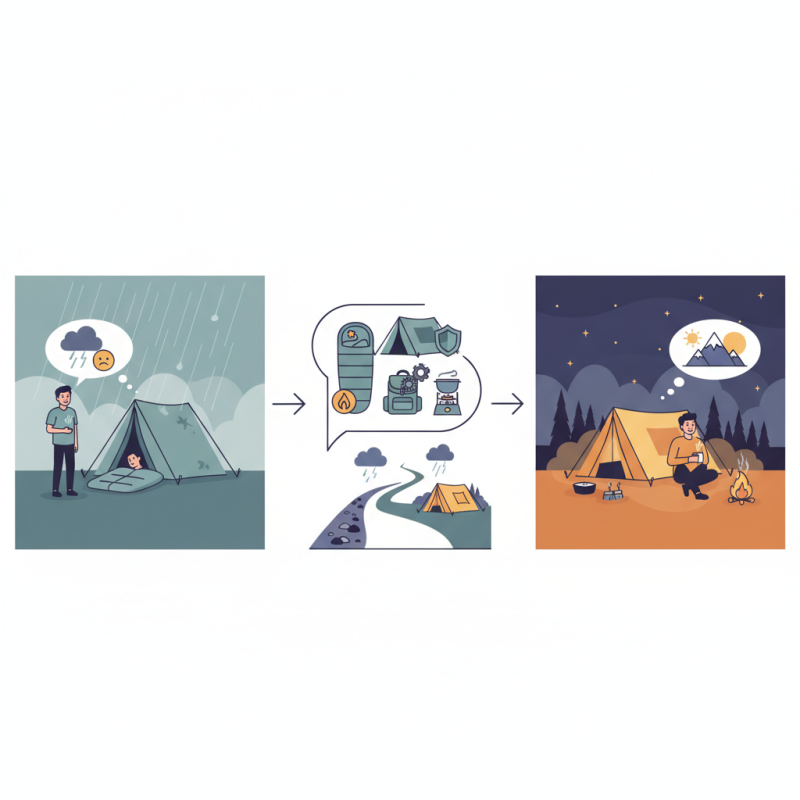
Without proper equipment, even a short trip can become a nightmare. Imagine being caught in the cold with a sleeping bag that isn’t warm enough. Or, try to picture a day spent in the rain because your tent is leaky. These scenarios are all too common when people overlook their choices.
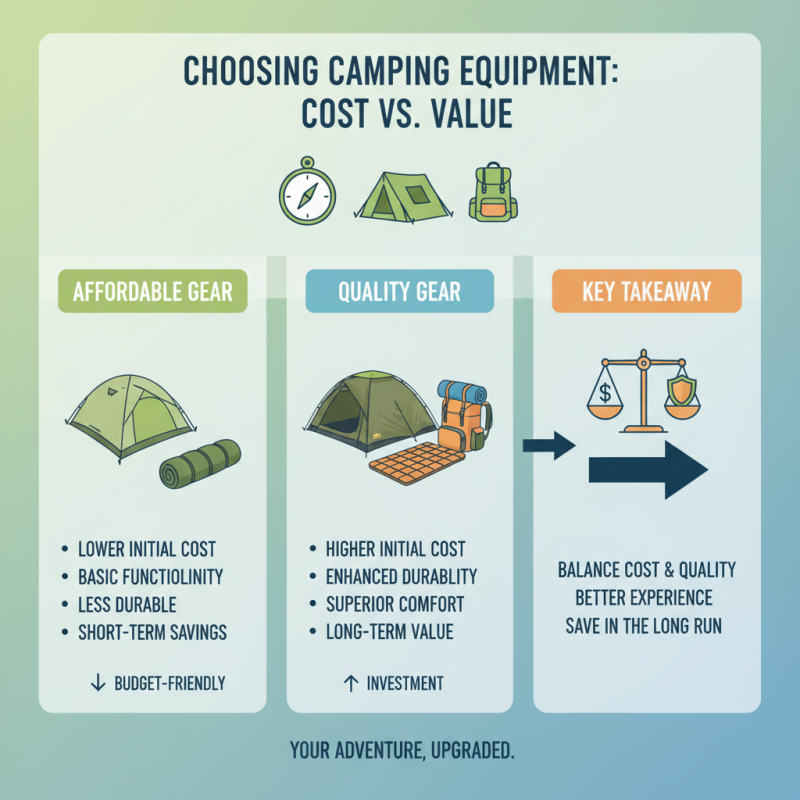
Yet, many still underestimate the significance of quality camping equipment. They may settle for cheaper alternatives. However, investing wisely in your gear often leads to more enjoyable and memorable experiences. Each item, from your backpack to your stove, plays a role in ensuring a successful adventure. Prioritizing the right camping equipment can truly elevate your journey, but it is easy to make mistakes or overlook details.
The Role of Camping Equipment in Ensuring Safety and Comfort
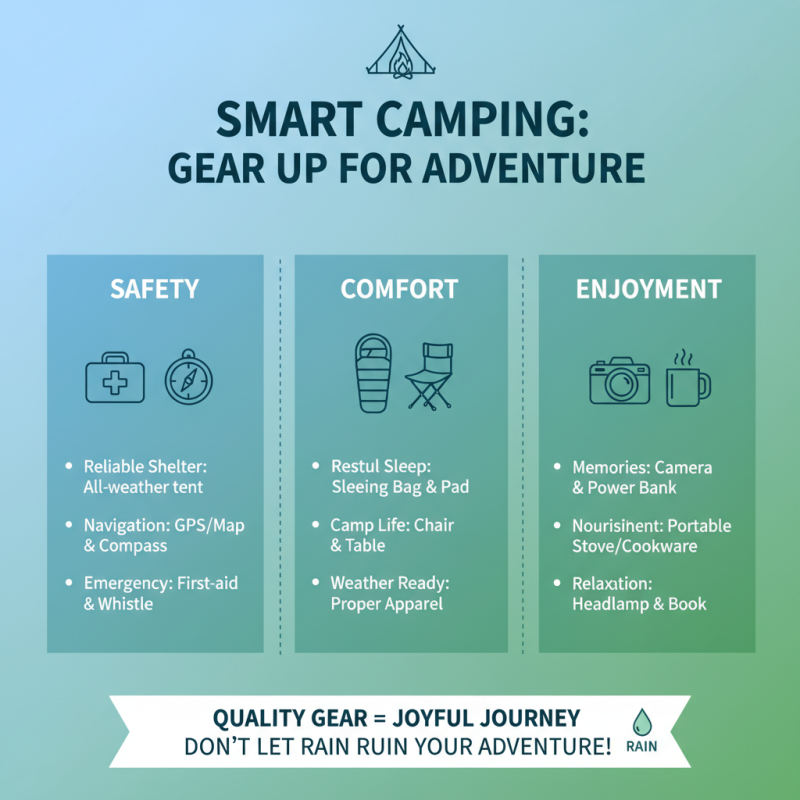
Choosing the right camping equipment is crucial for your overall experience. Safety and comfort should always be your top priorities. The wrong gear can lead to discomfort or even dangerous situations. For example, a poorly insulated sleeping bag can leave you shivering through the night. This can ruin your trip and affect your health.
When selecting equipment, think about the conditions you’ll face. Will it rain? Is it cold or hot? These factors determine what you should pack. Always prioritize essentials like a reliable tent, a warm sleeping bag, and weather-appropriate clothing.
**Tips:** Test your equipment before heading out. Can your tent handle strong winds? Is your stove working efficiently? Small checks can prevent big problems later. Remember to pack first aid supplies, even for short trips.
While it’s tempting to save money, buying quality gear is an investment. Inadequate equipment can lead to injuries or discomfort. Reflect on past experiences. Did your gear make you feel secure? Did you sleep well? Your answers can guide future purchases.
Importance of Choosing the Right Camping Equipment
This bar chart illustrates the importance levels (on a scale of 1 to 10) for various types of camping equipment. Proper selection of these items is crucial for enhancing safety and comfort during camping trips.
Impact of Proper Gear on Outdoor Experience Quality
Choosing the right camping equipment significantly impacts the overall quality of your outdoor experience. Proper gear ensures your safety, comfort, and enjoyment while exploring nature. Imagine a rainy night without a reliable tent. It can ruin your mood and affect your ability to enjoy the wilderness. Quality gear can make the difference between a joyful adventure and a miserable ordeal.
Having the right equipment not only improves your experience but also affects your energy levels. Heavy backpacks filled with unnecessary items can drain your stamina. Conversely, a well-packed bag can enhance mobility and make hiking enjoyable. Many campers overlook essential accessories. Simple tools, like a reliable flashlight or a compact first aid kit, can be lifesavers. Reflecting on past trips can help you identify what worked and what did not.
Thinking back, many may recall moments of discomfort due to poor choices. Wet socks from inadequate footwear can lead to blisters. A cold night because of insufficient sleeping gear can ruin your rest. Such reflections teach valuable lessons. Every camping trip provides opportunities to refine your choices and learn from mistakes.
Types of Camping Equipment: Essentials vs. Non-Essentials
Choosing the right camping equipment is crucial for a successful outdoor experience. There are two main categories: essentials and non-essentials. Essentials include items like tents, sleeping bags, and cooking gear. These are fundamental to ensure safety and comfort. Non-essentials, like decorative lights or luxury cooking gadgets, might be fun but can weigh you down.
When packing, consider your trip's length and location. For a weekend trip, focus on lighter gear. Bring a compact tent and lightweight cookware. A good night’s sleep is vital, so prioritize a comfortable sleeping pad. It’s easy to overlook the importance of hydration. Don’t forget a reliable water filter or purification tablets.
Here are some tips: Always test your gear before heading out. A tent that won’t set up easily can ruin your night. Keep a checklist to avoid missing any essentials. Simplify your gear to reduce stress. If possible, borrow items before purchasing. Reflection is key; what worked last time? What didn’t? Adapt your packing list to improve your next adventure.
Factors to Consider When Choosing Camping Gear for Different Environments
When selecting camping gear, the environment plays a crucial role. Different locations present unique challenges. For instance, a mountain trek differs significantly from a beach excursion. The winds can be intense in the mountains, while coastal weather may bring moisture and sand. Therefore, it’s essential to consider materials that withstand these elements.
Weight matters too. In mountainous regions, every ounce counts. Heavy gear can tire you out quickly. On the other hand, a beach trip allows for more comfort. You might choose bulkier items like a large umbrella. Yet, even for the beach, ensure your gear can handle salt and moisture. Lightweight tarps can shield against unexpected rain.
Don’t overlook comfort features. Insufficient insulation in a sleeping bag could lead to cold nights. Conversely, a poorly ventilated tent can turn hot. Paying attention to these details can alter your experience. Often, people buy gear based solely on price or aesthetic. This leads to regrets later. Carefully matching equipment to the specific conditions is vital for enjoying the great outdoors.
Why Is Choosing the Right Camping Equipment Important? - Factors to Consider When Choosing Camping Gear for Different Environments
| Camp Environment |
Essential Equipment |
Key Considerations |
Weight (lbs) |
Durability |
| Forest Camping |
Tent, Sleeping Bag, Cooking Gear |
Weather resistance, Comfort |
10.5 |
Moderate |
| Desert Camping |
Shade, Water Containers, Lightweight Shelter |
UV Protection, Hydration |
6.0 |
High |
| Mountain Camping |
Insulated Gear, Climbing Equipment, Navigation Tools |
Temperature Control, Safety |
15.0 |
Very High |
| Coastal Camping |
Waterproof Tent, Fishing Gear, Sand Protective Gear |
Saltwater Resistance, Wind Stability |
12.0 |
High |
| Rainforest Camping |
Mold-resistant Tent, Bug Repellent Gear |
Waterproofing, Bug Protection |
11.0 |
Moderate |