Best Inflatable Tent for Outdoor Adventures What to Consider?
When planning an outdoor adventure, choosing the right gear is crucial. One popular option is the Inflatable Tent. These tents offer unique benefits for campers and hikers. They are lightweight, portable, and easy to set up. However, not all inflatable tents are created equal.
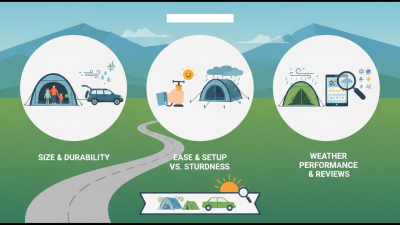
Consider your specific needs before purchasing. Think about the size of your group, the weather conditions, and the terrain. An inflatable tent might not suit all environments. Some users report struggles with durability. Researching materials and reviews can help ensure you make the right choice.
Overall, the inflatable tent can enhance your outdoor experiences if chosen wisely. Weigh the pros and cons carefully. This guide will explore key factors to consider, helping you find the perfect inflatable tent for your next adventure.
Key Features to Look for in an Inflatable Tent for Outdoor Use
When selecting the best inflatable tent for outdoor adventures, key features are crucial. A report from the American Camping Association indicates that 43% of campers prioritize weather resistance. A durable, waterproof material is vital to ensure safety and comfort. Look for tents made with high-quality fabrics, such as ripstop nylon or polyester. These materials provide excellent stability against unpredictable weather elements.
Another important aspect is the tent's setup time. Research shows that 60% of outdoor enthusiasts prefer tents that can be pitched in under 10 minutes. Inflatable tents typically feature air beams. This design reduces setup time significantly, enhancing your outdoor experience. Meanwhile, weight and packed size matter. An ideal inflatable tent should be lightweight but spacious. Some models weigh as little as 10 pounds, making them easier to transport.
Ventilation is also essential in an inflatable tent. Poor air circulation can lead to discomfort, especially in warm climates. Look for models with multiple vents or windows to maintain airflow. Consider also the tent’s storage options. Sufficient internal pockets and external attachments are necessary for gear organization. It’s worth contemplating whether the tent meets your space needs, especially if camping with a group. The usability features can often make or break your adventure.
Material Durability: Comparing Fabrics for Inflatable Tents
When choosing an inflatable tent, material durability should be a top consideration.
Different fabrics offer varying levels of strength and resistance to the elements.
For instance, polyester is lightweight and dries quickly, but may not withstand harsh winds as well as nylon.
Nylon, particularly when treated, can provide superior strength, making it ideal for challenging outdoor adventures.
Consider the denier rating of the fabric. Higher numbers typically indicate greater durability.
A 210D nylon may be strong but can be less breathable compared to a 300D option.
Additionally, look for UV resistance features. Tents exposed to sunlight can degrade quickly without proper treatment.
Some materials may appear sturdy but can tear unexpectedly, leading to disappointing experiences.
Think about waterproofing too. Many tents use PU coatings, which can wear over time.
While it’s tempting to choose lighter fabrics for easy transport, this often means sacrificing longevity.
Reflect on past experiences with tent materials during severe weather. Did your tent hold up? Did it leak?
Choosing the right fabric is crucial to ensuring a successful outdoor adventure.
Look for options that boast both strength and water resistance to avoid disappointment in the great outdoors.
Sizing Options: Choosing the Right Tent Capacity for Your Group
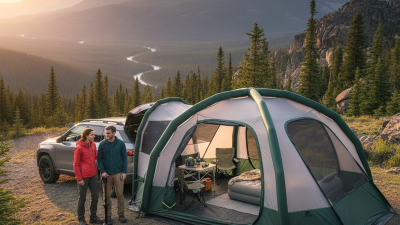
Choosing the right tent capacity is vital for a successful outdoor adventure. Consider your group size before making a purchase. An inflatable tent may be labeled for two, four, or more people. However, comfort is key. If your group is four, buying a tent for six offers extra space for gear.
Tips: Always measure your group. Space for sleeping bags and personal items matters. Overcrowding leads to discomfort. A tent that feels cramped can ruin the experience. Think about how much gear you'll bring along.
Think about the purpose of your trip. If you plan on spending lots of time inside the tent, consider a larger size. Tents with extra space can serve as a cozy retreat during bad weather. If it's just for sleeping, a smaller option might suffice.
Remember, not all tents are built alike. Check the layout and height. A good height allows you to stand and move around. It's about more than just fitting everyone in. Selecting the right tent can prevent a chaotic camping experience.
Inflation Mechanisms: Understanding Different Types and Their Efficiency
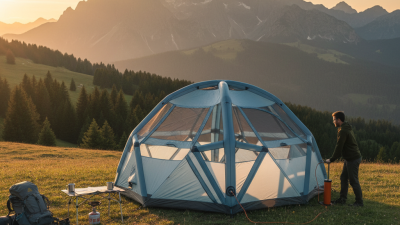
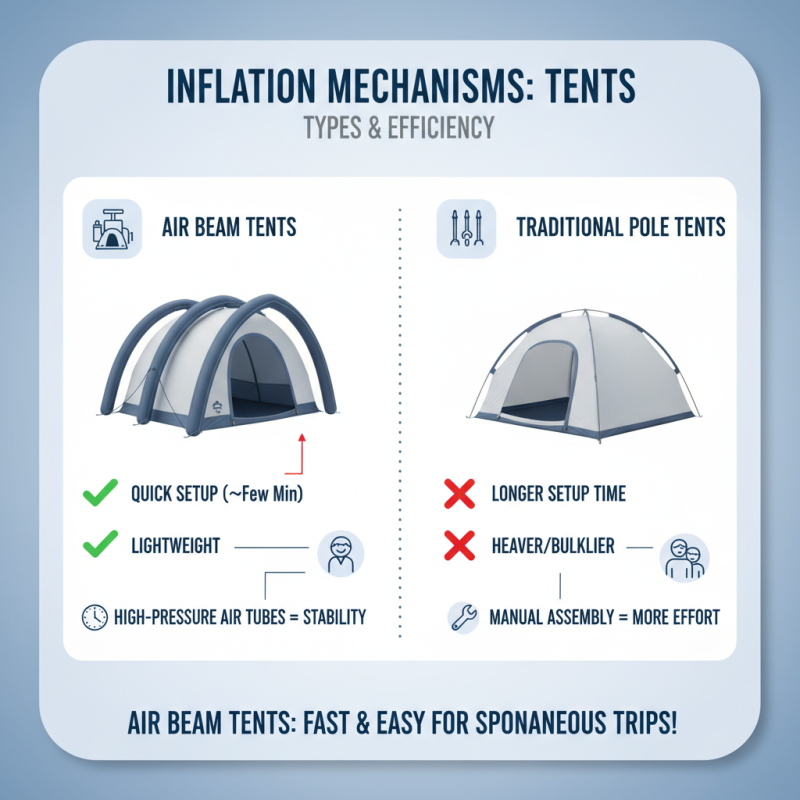
When choosing the best inflatable tent, understanding inflation mechanisms is crucial. There are several types available, each with unique characteristics. Some tents use air beams, while others employ pole systems. Air beam tents are popular due to their quick setup and lightweight design. They rely on high-pressure air tubes, which provide excellent stability. Set up can take only a few minutes, making them attractive for spontaneous trips.
Conversely, pole-based inflatable tents offer a different experience. They incorporate inflatable poles and traditional fabric, providing sturdiness in high winds. However, they can take longer to inflate, potentially causing frustration. Durability may vary, depending on the material used in construction. It's essential to consider your specific needs, such as climate and terrain, when making a choice.
Another factor to think about is the efficiency of inflation. Some tents come with built-in pumps, which facilitate the process. Manual pumps can be tedious, especially if you're in a rush. Proper maintenance of these mechanisms is vital for long-term use. Leaks or weaknesses in the seams can lead to serious issues during your adventure.
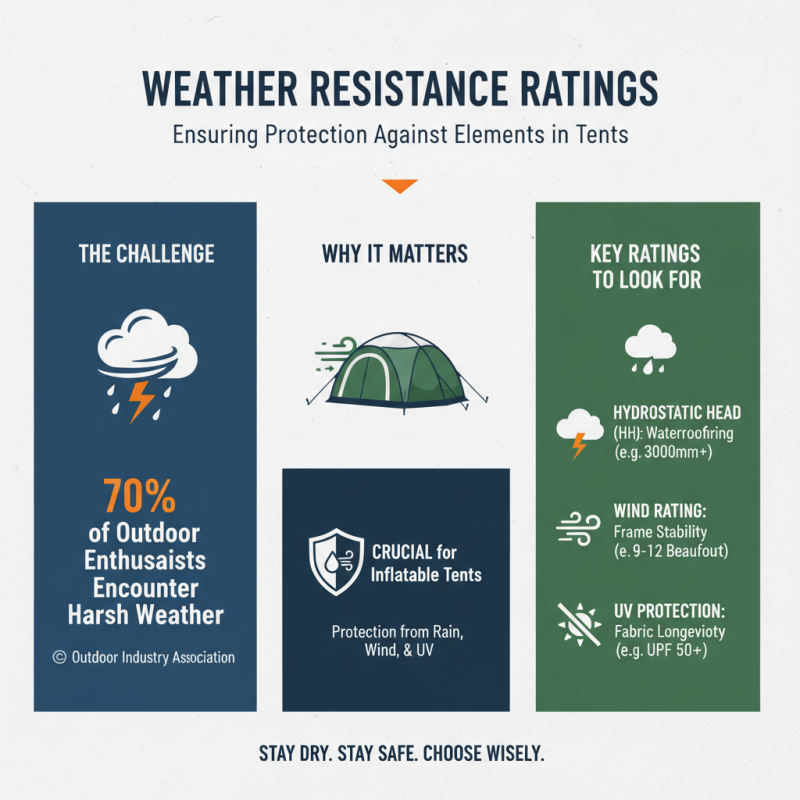
Weather Resistance Ratings: Ensuring Protection Against Elements in Tents
When choosing an inflatable tent, weather resistance is crucial. According to the Outdoor Industry Association, roughly 70% of outdoor enthusiasts report encountering harsh weather conditions during trips. Thus, selecting a tent with high weather resistance ratings becomes essential.
Tents are often rated for waterproofing using the Hydrostatic Head test. A tent with a rating above 3000mm is considered excellent for heavy rainfall. Additionally, wind resistance is a significant factor. Research by the National Park Service reveals that tents should withstand winds of at least 30mph for safe use. Look for tents with reinforced seams and sturdy poles to ensure durability against blustery conditions.
Breathability is also a concern. Many campers overlook ventilation, leading to condensation inside the tent. This can create an uncomfortable environment, even in good weather. It's vital to consider fabrics that allow moisture to escape while keeping rain out. Read reviews and user experiences to assess how different models perform in various weather conditions.